
The 3-Bedroom Hack
2000 Carver 506 Motor Yacht — $149,000
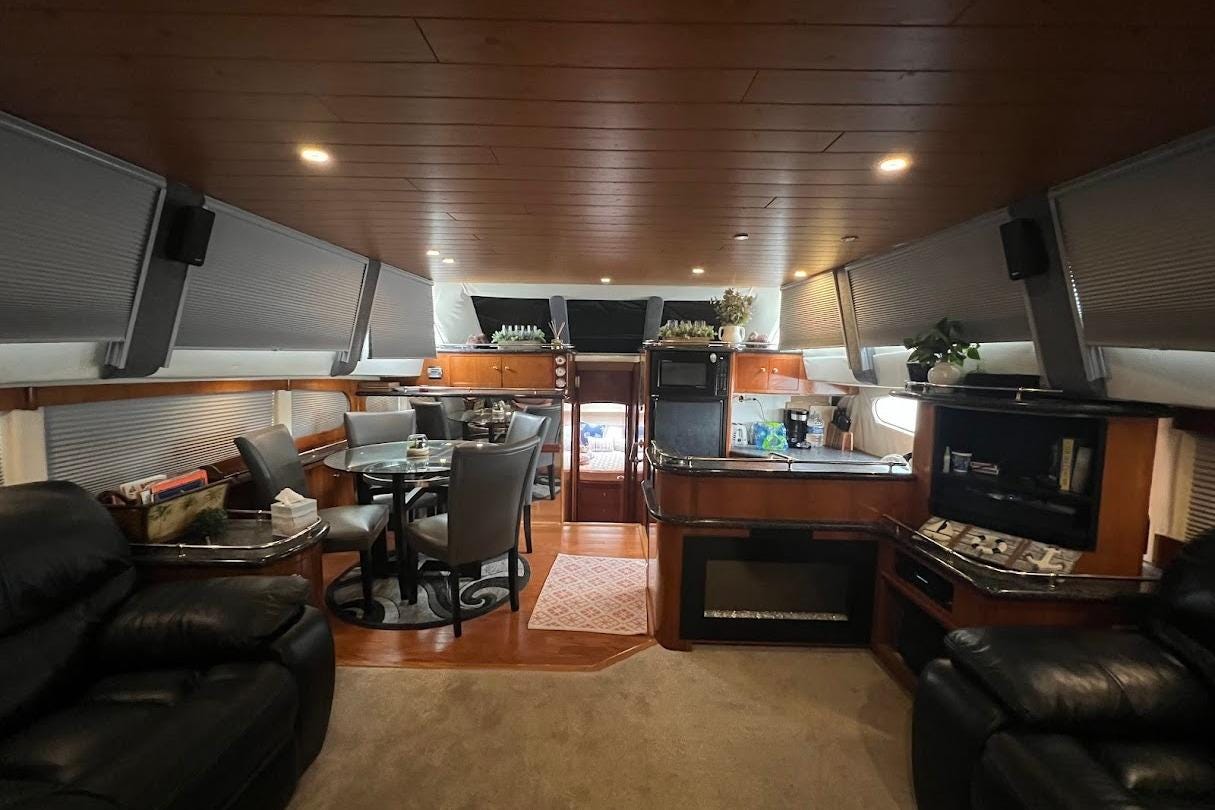
A basic 3-bedroom waterfront condo in North Carolina will easily cost you $800,000 to over $1,000,000, saddling you with a soul-crushing monthly mortgage payment. Or, you could buy this boat for $149,000.
Currently sitting in North Carolina, this 51-foot Carver 506 is the ultimate real estate arbitrage. Carver is famous for building “wedding cakes on the water.” They completely sacrificed sleek exterior styling to maximize interior living space. By pushing the walls all the way to the edge of the hull, the living room is a massive 15 feet wide. You get a full-sized kitchen, a dining area, three separate bedrooms, and three full bathrooms. It does not feel like a boat; it feels like a luxury apartment.
This week we are addressing the absolute biggest financial pain point on the East Coast right now: the cost of housing.
We have been conditioned to believe that living on the water requires a multi-million dollar real estate portfolio. The “Smart Money” knows that is a lie. If you are willing to trade a concrete foundation for a fiberglass hull, you can buy a multi-bedroom waterfront home for less than a 20% down payment on a suburban starter house.
This week, we are looking at The Liveaboard Fleet. These aren’t boats designed to cross oceans; they are massive floating condos designed for interior volume, residential comfort, and bypassing the terrestrial housing market entirely.
The Specs
Builder: Carver Yachts
Price: $149,000
Location: Carolina Beach, North Carolina
LOA: 51’ 7”
Beam: 15’ 4”
Cabins / Heads: 3 / 3
Engines: Twin Cummins Diesels (450 HP each)
Why We Love It (The “Green Flags”)
The “Sky Lounge” Patio: The boat features a fully enclosed, air-conditioned aft deck and bridge. It essentially acts as a massive floating sunroom with a retractable sunroof, a wet bar, and an ice maker.
The Diesel Upgrade: Pushing a 50,000-pound floating condo requires serious power. Thankfully, this boat is equipped with twin Cummins diesels, widely considered some of the most reliable and sought-after engines in the marine industry.
The Layout: The master suite is located entirely in the back of the boat, completely separated from the two guest bedrooms up front. It features a walk-around queen bed, massive cedar-lined closets, and a split bathroom setup with a dedicated shower room.
The Reality Check (The “Red Flags” & Liveaboard Secrets)
Buying a $149k, 3-bedroom floating condo on the East Coast is the easy part. The hardest part—and the reason everyone doesn’t do this—is the reality of liveaboard logistics.
The Windage: Because this boat sits over 20 feet tall, it acts like a giant fiberglass sail. If you decide to pull off the dock and cruise the Intracoastal Waterway, docking in a heavy crosswind requires serious twin-engine handling skills.
The “Ugly” Tax: You have to check your ego at the dock. Purists hate the look of the Carver 506. You are buying interior volume, not sleek Italian styling.
🔓 The Master Guide: How to Actually Liveaboard on the East Coast
If you want to pull this off, you have to understand the East Coast slip game.
1. “Sneak-a-Boards” vs. Legal Liveaboards Most marinas legally cap liveaboard status to only 10% to 15% of their total slips due to local zoning and environmental laws. Because of this, waitlists are long. As a result, a huge percentage of the people living on boats are “Sneak-a-boards.” They rent a standard recreational slip (around $900-$1,200/month for a 51-footer) and quietly sleep on their boat 4 to 5 nights a week. If you are quiet, don’t leave trash on the docks, and tip the dockhands, marinas often look the other way. If you throw loud parties, you will be evicted in 30 days.
2. Securing a Legal Slip To get a legal liveaboard slip in the Carolinas, you pay a “Liveaboard Surcharge” (usually an extra $150 to $300 on top of your slip fee). For a 51-foot Carver in a mid-tier marina, expect to pay $1,100 to $1,500 a month in total slip fees. That covers your “rent,” your water, and your access to the marina’s private parking, WiFi, and shoreside showers.
3. The Insurance Trap Many massive insurance carriers (like Geico or Progressive) will instantly drop you if they find out the boat is your primary residence. You must work with a specialized marine insurance broker to secure a specific “Liveaboard Policy,” which covers liability for living on the water full-time. Do not lie to your insurance company.


